
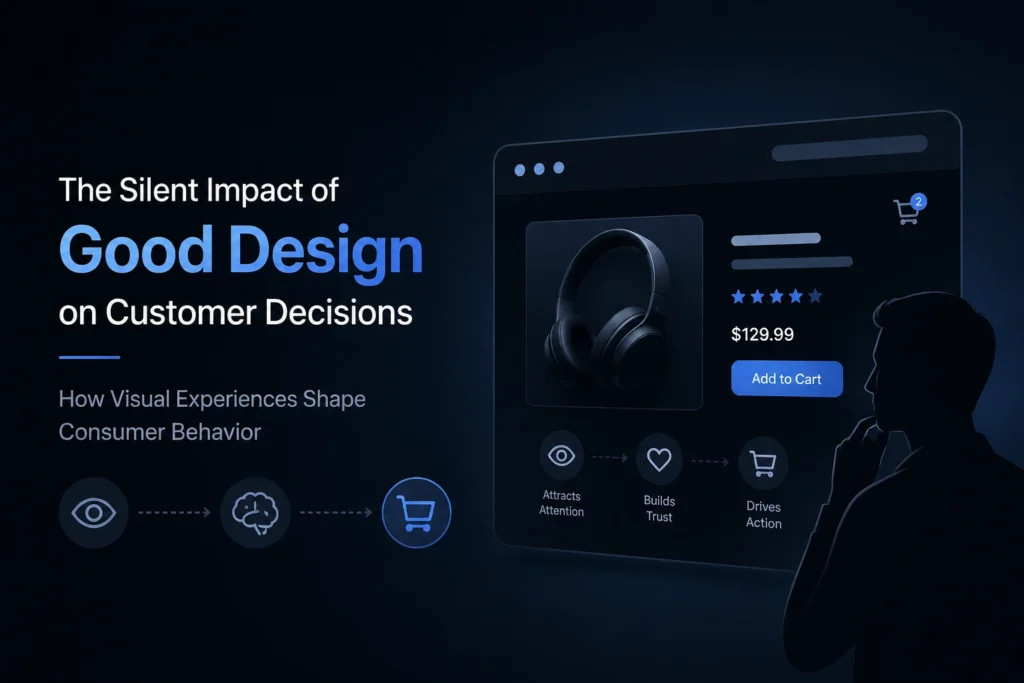
Introduction: Design Speaks Before Words Do
In today’s digital world, consumers form opinions about brands within seconds. Before they read a product description, explore a website, or interact with customer support, they encounter something even more influential—design. Whether it is a website, mobile application, advertisement, social media post, or product packaging, design creates the first impression and often determines whether a customer stays or leaves.As a Performance Marketer, I’ve learned that successful campaigns aren’t driven by advertising alone. They succeed when compelling visuals, emotional marketing, and data-driven strategies work together. Great design doesn’t simply make a website look attractive—it builds trust, captures attention, and encourages people to take action.
Although many businesses focus heavily on marketing strategies, pricing, and product features, they sometimes underestimate the power of design. However, good design silently influences customer perceptions, emotions, and purchasing decisions. It communicates professionalism, builds trust, enhances usability, and shapes the overall customer experience. Consequently, businesses that prioritize design gain a significant advantage in attracting, engaging, and converting customers.
Understanding the Psychology of Visual Perception
Human beings are naturally visual creatures. Research consistently shows that people process visual information faster than text. As a result, consumers often form impressions about a brand before reading a single word. These initial impressions influence how they perceive credibility, quality, and value.
Furthermore, visual perception affects emotional responses. Colors, typography, layouts, and imagery trigger subconscious reactions that shape customer attitudes. Therefore, businesses must understand how visual elements influence consumer psychology if they want to create meaningful and effective customer experiences.
First Impressions: The Critical Few Seconds
First impressions play a crucial role in customer decision-making. When users visit a website or encounter a brand for the first time, they quickly evaluate whether the experience appears trustworthy and professional. Consequently, design becomes one of the most influential factors in shaping these judgments.
Moreover, customers rarely give businesses a second chance to make a positive first impression. A cluttered website, poor visual hierarchy, or outdated design can create doubts about credibility. On the other hand, clean and professional design encourages users to explore further. Therefore, investing in quality design can significantly improve customer retention and engagement.
Building Trust Through Professional Design
Trust remains one of the most important factors in purchasing decisions. Consumers are more likely to engage with businesses that appear reliable and credible. Interestingly, design often serves as the first indicator of trustworthiness.
Additionally, professional design communicates attention to detail and commitment to quality. When customers encounter polished visuals, consistent branding, and intuitive user experiences, they develop greater confidence in the business. Consequently, design becomes a powerful tool for establishing trust before any direct interaction occurs.
The Role of Color Psychology in Customer Decisions
Color plays a significant role in influencing emotions and perceptions. Different colors evoke different psychological responses, making color selection a critical component of effective design. For example, blue often represents trust and professionalism, while green symbolizes growth and harmony.
Furthermore, color can influence purchasing behavior. Strategic use of colors helps guide attention, create emotional connections, and reinforce brand identity. Therefore, businesses that understand color psychology can use it to strengthen communication and improve customer engagement.
User Experience: Where Design Meets Functionality
Good design extends beyond aesthetics. While visual appeal attracts attention, functionality determines whether customers remain engaged. User Experience (UX) design focuses on creating intuitive and efficient interactions that make it easy for customers to achieve their goals.
Moreover, a seamless user experience reduces frustration and increases satisfaction. Customers appreciate websites and applications that are easy to navigate and understand. Consequently, businesses that prioritize UX design often experience higher conversion rates, improved customer retention, and stronger brand loyalty.
Visual Hierarchy and Decision-Making
Visual hierarchy refers to the arrangement of design elements in a way that guides user attention. Effective hierarchy helps customers focus on the most important information without feeling overwhelmed. Therefore, it plays a critical role in influencing customer behavior.
Additionally, visual hierarchy simplifies decision-making. By organizing content strategically, businesses can direct users toward desired actions such as making a purchase, subscribing to a service, or contacting a company. As a result, effective design improves both usability and conversion performance.
The Power of Consistent Branding
Consistency is a fundamental principle of successful branding. When businesses maintain consistent visual elements across websites, advertisements, social media platforms, and marketing materials, they create familiarity and recognition. Consequently, customers are more likely to remember and trust the brand.
Furthermore, consistent branding strengthens emotional connections. It reinforces the brand’s identity and communicates professionalism. Therefore, businesses that invest in cohesive design systems often enjoy stronger brand awareness and greater customer confidence.
Emotional Design and Customer Connection
Design does more than communicate information—it creates emotions. Emotional design focuses on creating experiences that evoke positive feelings and meaningful connections. Whether through visuals, interactions, or storytelling, emotional design influences how customers feel about a brand.
Moreover, emotional experiences contribute to long-term loyalty. Customers often remember how a brand made them feel rather than specific details about a product. Consequently, businesses that incorporate emotional design into their strategies can build stronger relationships and encourage repeat engagement.
Mobile-First Design in the Digital Era
As mobile usage continues to grow, businesses must prioritize mobile-friendly experiences. Consumers increasingly browse, shop, and interact with brands through smartphones and tablets. Therefore, mobile-first design has become essential for reaching modern audiences.
Additionally, mobile-friendly design improves accessibility and convenience. Responsive layouts, fast loading times, and intuitive navigation enhance the customer experience across devices. As a result, businesses that embrace mobile-first principles are better positioned to meet customer expectations and drive conversions.
How Good Design Increases Conversion Rates
Conversion optimization often focuses on marketing tactics and sales strategies. However, design significantly influences conversion rates by shaping user experiences and reducing barriers to action. Customers are more likely to complete purchases when they feel comfortable and confident throughout the process.
Furthermore, effective design guides users toward desired outcomes through clear calls-to-action, intuitive layouts, and persuasive visuals. Consequently, businesses that invest in high-quality design often experience measurable improvements in sales and customer engagement.
The Competitive Advantage of Exceptional Design
In crowded markets, businesses must find ways to differentiate themselves from competitors. While products and services may be similar, design provides an opportunity to create unique and memorable experiences. Therefore, exceptional design becomes a valuable competitive advantage.
Additionally, customers increasingly expect high-quality digital experiences. Businesses that fail to meet these expectations risk losing potential customers to competitors with better design. As a result, investing in design is no longer optional—it is a strategic necessity for sustainable growth.
The Future of Design in Customer Experience
Technology continues to reshape how businesses interact with consumers. Artificial intelligence, augmented reality, and personalized experiences are transforming design possibilities. However, despite technological advancements, the core purpose of design remains unchanged: creating meaningful and effective human experiences.
Moreover, future design trends will likely emphasize personalization, accessibility, and emotional engagement. Businesses that adapt to these changes while maintaining strong design principles will continue to build stronger customer relationships. Consequently, design will remain a critical factor in shaping consumer decisions for years to come.
Conclusion: The Invisible Force Behind Every Customer Decision
Good design often works silently behind the scenes, yet its influence is profound. From creating positive first impressions to building trust, enhancing usability, and encouraging conversions, design affects nearly every stage of the customer journey. Although customers may not consciously recognize its impact, design shapes how they perceive brands and make decisions.
Therefore, businesses that prioritize design gain more than visual appeal—they gain a powerful tool for communication, engagement, and growth. By understanding the psychology behind design and creating meaningful user experiences, organizations can influence customer decisions in subtle but significant ways. Ultimately, the silent impact of good design is not merely about aesthetics; it is about creating experiences that inspire confidence, build relationships, and drive lasting success.