
Introduction: The Emotional Engine Behind Every Purchase
In today’s competitive digital landscape, businesses invest heavily in advertising, branding, and promotional campaigns to attract customers. While product quality, pricing, and features remain important, they are rarely the primary reasons people choose one brand over another. Instead, emotions often drive purchasing decisions, shaping how consumers perceive brands and influencing their behavior long before logic enters the conversation.As an SEO Specialist, I’ve learned that successful SEO isn’t just about ranking on search engines—it’s about understanding human behavior. Behind every search query is a real person with a problem, a goal, or an emotion. The brands that recognize this create content that not only ranks higher but also builds trust, loyalty, and lasting customer relationships.
Marketing has evolved far beyond simply showcasing products and services. Modern consumers seek meaningful experiences, authentic connections, and brands that align with their values. Consequently, businesses that understand the emotional side of marketing create stronger customer relationships and achieve greater long-term success. The most successful marketing campaigns do not simply sell products; they sell feelings, aspirations, and experiences that resonate deeply with people.
Understanding the Psychology of Consumer Behavior
Human decision-making is far more emotional than most people realize. Although consumers often believe they make rational choices, psychological research consistently demonstrates that emotions play a significant role in influencing behavior. People naturally gravitate toward products and brands that make them feel secure, confident, happy, inspired, or valued.
Furthermore, emotions help simplify complex decisions. When customers face multiple options with similar features and pricing, emotional connections often become the deciding factor. Consequently, brands that understand consumer psychology can create marketing strategies that resonate more effectively with their target audiences.
Why Emotions Influence Buying Decisions More Than Logic
Logic helps consumers justify purchases, but emotions often initiate them. For example, someone may purchase a luxury watch because it symbolizes success and achievement rather than because it tells time more accurately. Similarly, customers often choose premium brands because of the feelings associated with ownership rather than purely functional benefits.
Moreover, emotional decisions occur quickly. The human brain processes emotional information faster than logical information. As a result, consumers frequently develop positive or negative impressions of brands within seconds. Therefore, marketers who understand emotional triggers can influence purchasing behavior more effectively than those who focus exclusively on product specifications.
The Science Behind Emotional Marketing
Neuroscience has revealed that emotions significantly impact memory, attention, and decision-making. When consumers experience strong emotions, their brains are more likely to retain information and form lasting impressions. Consequently, emotionally engaging marketing campaigns often achieve higher levels of brand recall and customer engagement.
Additionally, emotional experiences activate areas of the brain associated with reward and motivation. This connection explains why memorable advertisements, inspiring stories, and meaningful brand messages often outperform traditional promotional content. Therefore, emotional marketing is not merely a creative strategy—it is supported by scientific understanding of human behavior.
Building Brand Connections Through Human Experiences
Successful brands recognize that customers seek more than products. They seek experiences that improve their lives and fulfill emotional needs. Whether a company promotes confidence, happiness, belonging, security, or achievement, these emotional benefits often matter more than the product itself.
Furthermore, human experiences create deeper relationships between brands and consumers. Customers remember how a brand makes them feel long after they forget specific product features. Consequently, businesses that prioritize emotional experiences often enjoy stronger customer relationships and greater long-term loyalty.
Storytelling: The Heart of Emotional Marketing
Storytelling remains one of the most powerful tools in marketing because stories create emotional connections. Rather than presenting facts and statistics alone, stories allow brands to communicate values, experiences, and human emotions in meaningful ways.
Moreover, stories make brands relatable and memorable. Consumers connect with real people, authentic experiences, and meaningful journeys. As a result, businesses that use storytelling effectively can transform ordinary products into symbols of aspiration, inspiration, and personal identity. Through compelling narratives, brands create emotional bonds that extend beyond transactions.
Trust and Authenticity in Modern Marketing
Trust forms the foundation of every successful customer relationship. In an era where consumers encounter countless advertisements and promotional messages daily, authenticity has become increasingly valuable. People prefer brands that communicate honestly and consistently rather than those that rely on exaggerated claims.
Additionally, authentic marketing strengthens emotional connections. When businesses demonstrate transparency and genuine concern for their customers, they build credibility and confidence. Consequently, trust becomes a powerful emotional driver that influences purchasing decisions and encourages long-term customer loyalty.
How Successful Brands Create Emotional Loyalty
Customer loyalty extends beyond satisfaction. While satisfied customers may purchase repeatedly, emotionally connected customers become passionate advocates for a brand. They recommend products to friends, share positive experiences online, and remain loyal even when competitors offer similar alternatives.
Furthermore, emotional loyalty creates resilience. Customers who feel connected to a brand are more likely to forgive occasional mistakes and continue supporting the company. Therefore, businesses that focus on emotional engagement often develop stronger and more sustainable customer relationships than those relying solely on product quality or pricing.
Social Media and the Rise of Emotional Engagement
Social media has transformed the relationship between brands and consumers. Today, businesses can interact directly with their audiences, creating opportunities for meaningful conversations and emotional engagement. Unlike traditional advertising, social media allows brands to demonstrate personality, authenticity, and responsiveness.
Moreover, emotional content performs exceptionally well on social platforms. Posts that inspire, entertain, educate, or connect emotionally often generate higher levels of engagement than purely promotional content. Consequently, brands that leverage emotional storytelling on social media can strengthen relationships and build thriving online communities.
The Role of Personal Values in Consumer Decisions
Modern consumers increasingly support brands that reflect their personal beliefs and values. Whether related to sustainability, social responsibility, innovation, or community involvement, values influence purchasing decisions in significant ways.
Additionally, shared values create emotional alignment between brands and consumers. People naturally gravitate toward organizations that represent causes and principles they care about. As a result, businesses that clearly communicate their mission and values often attract loyal customers who identify with their purpose.
Turning Customers into Brand Advocates
The ultimate goal of emotional marketing is not simply generating sales—it is creating advocates. Brand advocates actively promote businesses because they genuinely believe in the products, services, and experiences they provide. Their recommendations often carry more influence than traditional advertising.
Furthermore, advocacy emerges from emotional satisfaction rather than transactional relationships. Customers become advocates when brands consistently exceed expectations and create memorable experiences. Therefore, businesses that prioritize emotional connections can transform customers into powerful ambassadors who contribute to long-term growth.
The Future of Human-Centered Marketing
As technology continues to evolve, the importance of emotional marketing will only increase. Artificial intelligence, automation, and advanced analytics can improve efficiency and personalization. However, technology cannot replace genuine human connection. Consumers will continue seeking brands that understand their emotions, values, and aspirations.
Moreover, future marketing strategies will increasingly combine technological innovation with human-centered experiences. Businesses that balance data-driven insights with emotional intelligence will be better positioned to build meaningful relationships. Consequently, emotional marketing will remain a critical component of successful business strategies in the years ahead.
Conclusion: Marketing to Hearts Before Minds
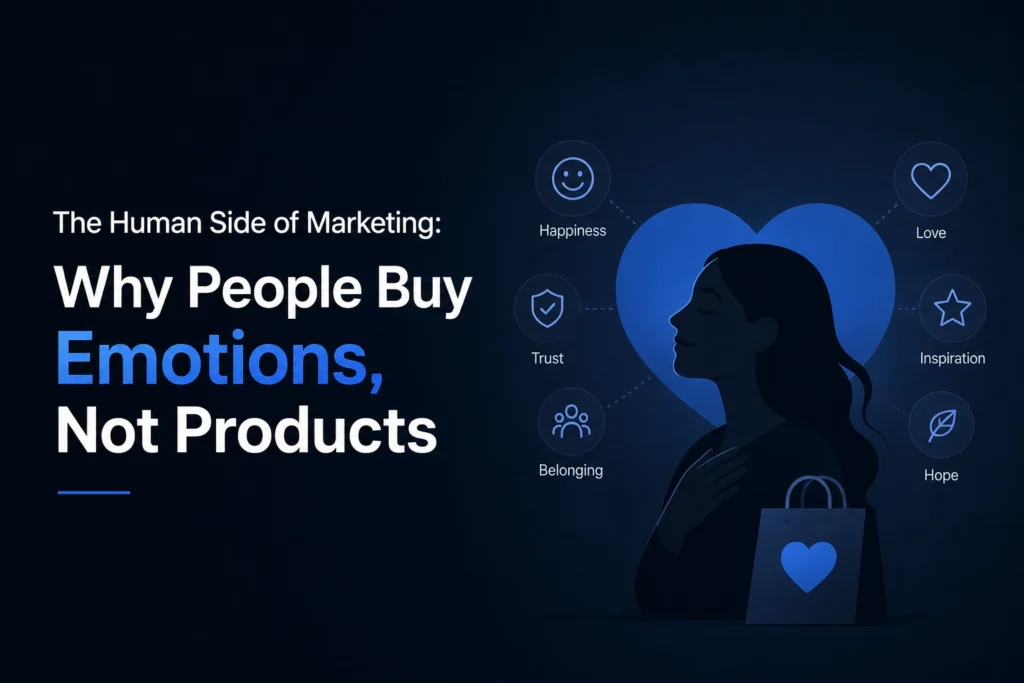
The most effective marketing strategies recognize a simple but powerful truth: people buy emotions, not products. While features, specifications, and pricing influence decisions, emotions ultimately determine how consumers perceive brands and whether they choose to engage with them. Feelings such as trust, happiness, confidence, belonging, and inspiration often drive purchasing behavior more than logical analysis alone.
Therefore, businesses that prioritize emotional connections gain a significant competitive advantage. By understanding consumer psychology, embracing authentic storytelling, building trust, and creating meaningful experiences, brands can foster lasting relationships with their audiences. In the end, successful marketing is not about convincing people to buy products—it is about connecting with their emotions and becoming a meaningful part of their lives.