
Introduction: The Currency of the Digital Age
In today’s highly connected world, businesses compete for more than just attention. They compete for trust. As consumers gain access to unlimited information, countless product choices, and thousands of marketing messages every day, trust has become the defining factor that influences purchasing decisions. While companies can attract visitors through advertising and promotions, they can only retain customers through credibility and reliability.
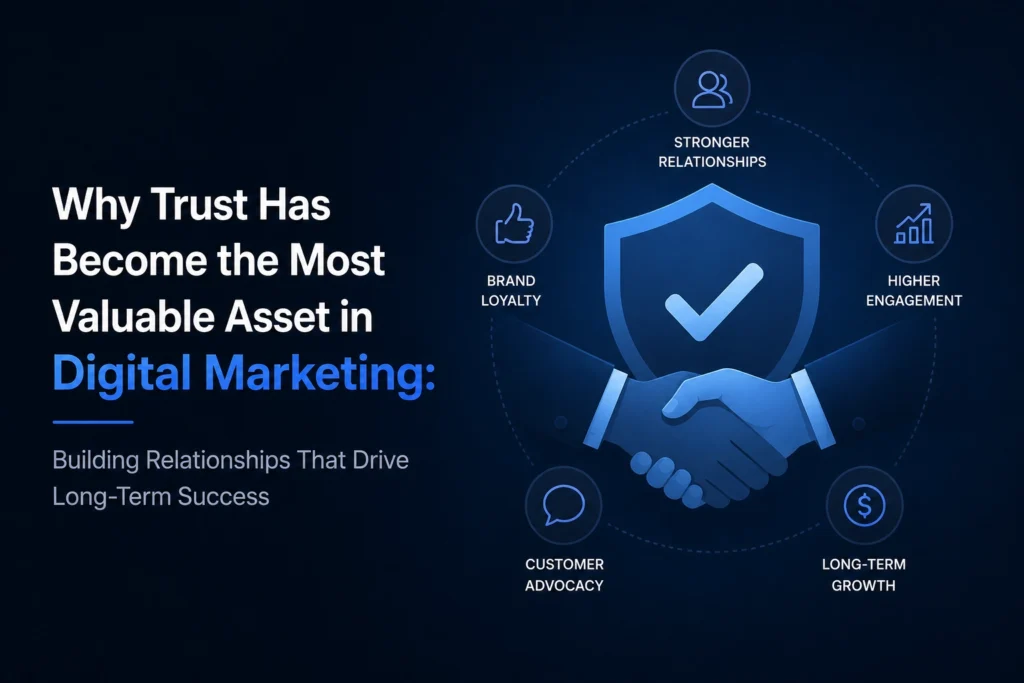
Digital marketing has evolved significantly over the last decade. Previously, brands focused heavily on visibility and reach. However, modern consumers expect more than attractive advertisements and persuasive sales pitches. They seek transparency, authenticity, and meaningful interactions. Consequently, brand trust has become one of the most valuable assets a company can possess. Organizations that prioritize trust consistently outperform competitors in customer retention, advocacy, and long-term growth.
Understanding the Modern Digital Consumer
The digital landscape has transformed the way consumers interact with businesses. Today, customers research products, read reviews, compare alternatives, and evaluate company reputations before making purchasing decisions. As a result, businesses must understand modern consumer behavior to remain competitive.
Furthermore, consumers have become increasingly skeptical of traditional advertising. They prefer recommendations from real users, expert opinions, and authentic brand communication. Therefore, businesses can no longer rely solely on promotional campaigns. Instead, they must demonstrate value, consistency, and integrity throughout every customer interaction. By understanding these changing expectations, brands can develop stronger relationships with their audiences.
Why Trust Matters More Than Ever
Trust serves as the foundation of every successful customer relationship. Without trust, even the most innovative products and services struggle to achieve sustainable success. Customers hesitate to purchase from companies they do not trust because uncertainty creates risk. Consequently, trust directly impacts buying decisions and customer satisfaction.
Moreover, trust influences how customers perceive a company’s intentions. When consumers believe a business genuinely prioritizes their needs, they are more likely to engage with the brand. This trust encourages repeat purchases, positive reviews, and referrals. Therefore, trust is not simply a marketing advantage—it is a critical business asset that drives growth and profitability.
Brand Trust: The New Competitive Advantage
In an increasingly crowded marketplace, products and services often appear similar. Many businesses offer comparable features, pricing, and benefits. Consequently, differentiation has become more challenging than ever. This reality makes brand trust a powerful competitive advantage.
Trusted brands enjoy stronger customer relationships because consumers feel confident in their purchasing decisions. Furthermore, trusted businesses can recover more effectively from challenges because customers are willing to give them the benefit of the doubt. As a result, organizations that consistently invest in building trust create a durable advantage that competitors cannot easily replicate.
The Connection Between Trust and Customer Loyalty
Trust plays a direct role in building customer loyalty. Customers who trust a brand are more likely to return for future purchases rather than exploring alternatives. Over time, these repeat customers become valuable advocates who contribute to sustainable business growth.
Additionally, loyal customers often spend more and remain engaged for longer periods. They develop emotional connections with brands that consistently meet their expectations. Consequently, businesses that focus on trust-building strategies often experience higher retention rates and lower customer acquisition costs. This relationship demonstrates why trust serves as the foundation of long-term customer loyalty.
Online Reputation: A Critical Digital Asset
In the digital era, a company’s online reputation significantly influences public perception. Customers frequently evaluate online reviews, testimonials, social media comments, and search engine results before making decisions. Therefore, maintaining a positive online reputation has become essential for success.
Furthermore, online reputation directly affects trust. Positive customer experiences reinforce confidence, while negative feedback can quickly damage credibility. Consequently, businesses must actively monitor and manage their digital presence. By responding professionally to customer concerns and consistently delivering quality experiences, brands can strengthen both their reputation and trustworthiness.
Content Marketing as a Trust-Building Tool
Effective content marketing allows businesses to educate, inform, and assist their audiences without immediately focusing on sales. Rather than promoting products aggressively, content marketing provides value through blogs, videos, guides, case studies, and educational resources.
Moreover, high-quality content positions a brand as an industry authority. When businesses consistently share useful and accurate information, they demonstrate expertise and credibility. As a result, audiences begin to trust their insights and recommendations. Therefore, content marketing serves as one of the most effective methods for establishing trust in the digital environment.
Social Media Marketing and Authentic Communication
Modern consumers expect brands to engage in meaningful conversations rather than one-way communication. Consequently, social media marketing has become an essential platform for building trust and fostering relationships. Through social media, businesses can interact directly with customers, answer questions, and address concerns in real time.
Additionally, authenticity plays a crucial role in social media success. Consumers quickly recognize insincere or overly promotional content. Therefore, brands must communicate honestly and transparently. By sharing behind-the-scenes content, customer success stories, and genuine interactions, businesses can strengthen trust and encourage deeper customer connections.
SEO and the Role of Visibility in Trust
Many people associate SEO primarily with search rankings and website traffic. While visibility remains important, SEO also contributes significantly to trust-building. Consumers often perceive top-ranking websites as more credible and authoritative because search engines prioritize relevant and high-quality content.
Furthermore, effective SEO improves user experience by providing valuable information, fast-loading pages, and easy navigation. These factors enhance customer confidence and satisfaction. Consequently, businesses that invest in SEO not only increase visibility but also strengthen their reputation and credibility among potential customers.
Brand Credibility: The Foundation of Sustainable Growth
Brand credibility reflects how trustworthy and reliable consumers perceive a company to be. It develops through consistent actions, transparent communication, and positive customer experiences. Without credibility, marketing efforts often fail to achieve lasting results.
Moreover, credibility influences every stage of the customer journey. From initial awareness to post-purchase engagement, customers evaluate whether a brand fulfills its promises. Therefore, businesses must align their messaging with actual performance. By consistently delivering value, organizations can establish strong credibility and foster long-term trust.
Customer Engagement and Meaningful Relationships
Strong customer engagement extends beyond likes, shares, and comments. True engagement occurs when customers actively interact with a brand because they feel valued and understood. Consequently, businesses must prioritize relationship-building rather than focusing solely on transactions.
Furthermore, engaged customers are more likely to trust and support a brand. They participate in conversations, provide feedback, and recommend products to others. As a result, customer engagement creates a cycle of trust, loyalty, and advocacy that contributes to long-term success. Therefore, organizations should view engagement as a strategic investment rather than a marketing metric.
Transparency and Authenticity in Digital Marketing
Transparency has become a defining characteristic of trustworthy brands. Modern consumers expect businesses to communicate openly about products, pricing, policies, and values. Consequently, companies that embrace transparency often develop stronger customer relationships.
Similarly, authenticity reinforces trust. Customers appreciate honest communication and realistic expectations. Therefore, businesses should avoid misleading claims and exaggerated promises. By remaining authentic and transparent, organizations can strengthen their credibility and differentiate themselves in competitive markets.
The Future of Trust in Digital Marketing
As technology continues to evolve, trust will become even more important. Artificial intelligence, automation, and advanced personalization offer new opportunities for businesses. However, these innovations also raise concerns about privacy, misinformation, and authenticity.
Therefore, companies must balance technological advancement with ethical responsibility. Brands that prioritize customer interests, protect data, and maintain transparency will earn greater trust in the future. Consequently, trust will remain one of the most valuable assets in digital marketing for years to come.
Conclusion: Trust Is the Ultimate Growth Strategy
In an era of constant connectivity and endless competition, trust has emerged as the most valuable asset in digital marketing. While businesses can invest heavily in advertising, technology, and promotional campaigns, sustainable success ultimately depends on the confidence customers place in a brand.
By strengthening brand trust, improving online reputation, leveraging content marketing, enhancing social media marketing, optimizing SEO, understanding consumer behavior, building brand credibility, fostering customer engagement, and encouraging customer loyalty, businesses can create meaningful relationships that drive long-term growth. Ultimately, trust is not merely a marketing objective—it is the foundation upon which successful brands are built.